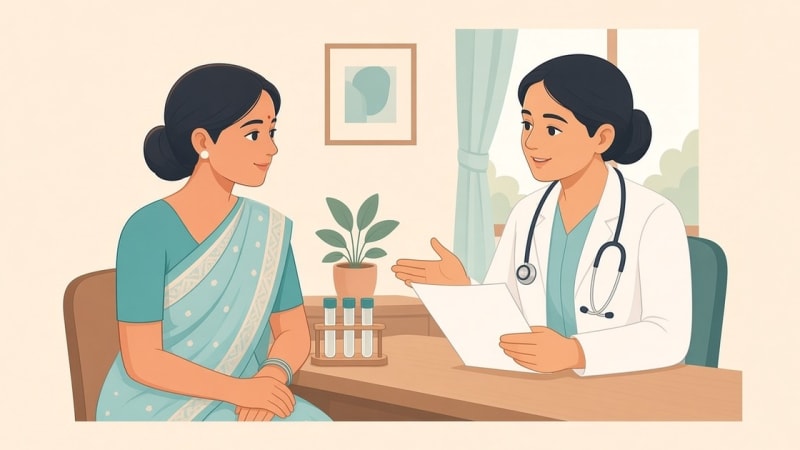
ECG Test: Why It Is Done, How It Works and What to Remember About Your Report
An ECG test records the heart's electrical activity in minutes. Learn why it is done, how to prepare, what it can and cannot show and what to do with your report.
Medically reviewed by Dr. Atiqur Rahman Shuva, MBBS · Reviewed on 27 November 2026
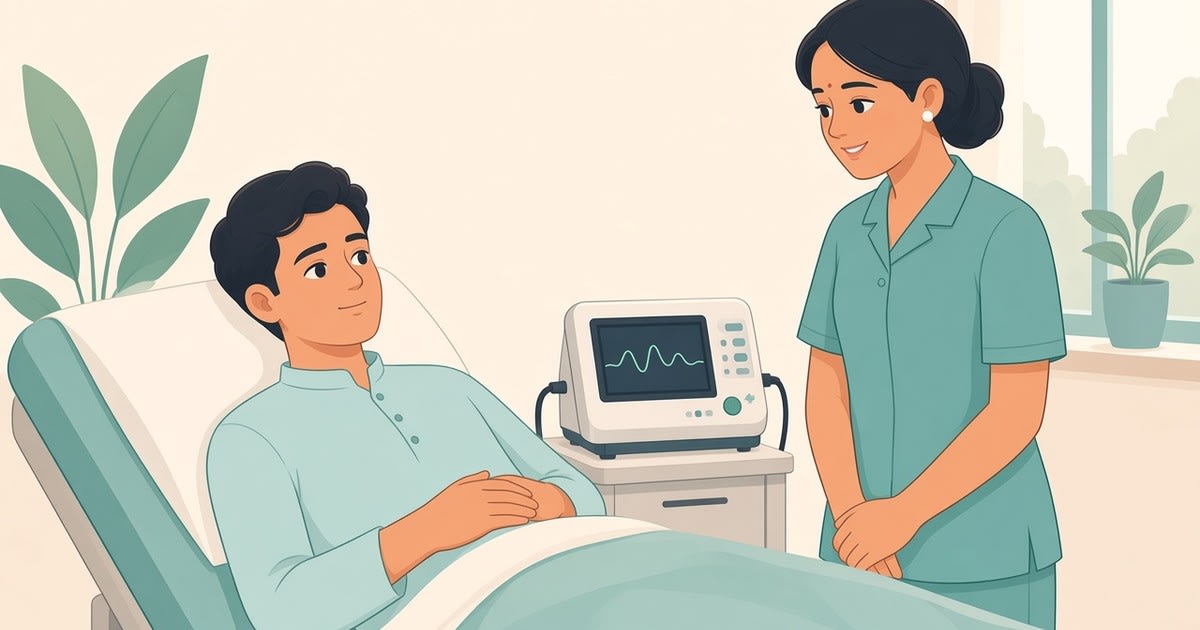
An ECG test (electrocardiogram) is a quick, painless test that records the electrical activity of your heart. It takes a few minutes, uses small sticky pads on your chest, arms and legs, and can help detect heart rhythm problems, signs of a heart attack and other heart conditions.
An ECG gives important clues, but a normal ECG does not rule out every heart problem. This guide explains why it is done, how it works and how to use your report.
Why is an ECG test done?
According to the NHS and MedlinePlus, a doctor may advise an ECG if you have:
- Chest pain or discomfort.
- Palpitations or a racing, skipping or very slow heartbeat.
- Breathlessness, dizziness or fainting.
- Risk factors such as high blood pressure, diabetes, high cholesterol or a family history of heart disease; see high blood pressure symptoms and home monitoring.
- A need for a check before surgery, or monitoring of a known heart condition.
How is an ECG test done?
- You lie down and relax, usually after removing clothing from the upper body (privacy is provided).
- Small sticky electrodes are placed on your chest, arms and legs.
- Wires connect the electrodes to the ECG machine.
- You lie still and breathe normally for a few seconds to a minute while the machine records.
- The electrodes are removed. The test is painless and does not send electricity into your body.
What types of ECG are there?
- Resting ECG: the standard test done lying down.
- Exercise (stress) ECG: recorded while you walk on a treadmill or cycle, under supervision.
- Ambulatory or Holter monitor: a portable device worn for 24 hours or more to catch rhythm problems that come and go.
How should you prepare?
- Wear loose clothing that is easy to open.
- Do not apply oil or lotion on the chest.
- Tell the technician about your medicines and symptoms.
- You usually do not need to fast, unless other tests are being done.
- Men with a lot of chest hair may need areas shaved for the pads to stick.
What can an ECG show?
An ECG can show the heart's rate and rhythm, signs of a past or ongoing heart attack, strain or thickening of the heart muscle, and some electrical conduction problems.
What can an ECG not show?
A normal resting ECG can miss problems that only occur sometimes, and it cannot show blocked arteries directly. Other tests such as an echocardiogram, stress test or angiogram may be needed. Symptoms always matter more than a single normal report.
What should you do after getting the report?
Take the ECG tracing and report to a doctor to interpret; do not decide for yourself from computer-printed wording such as "abnormal". Keep a copy for comparison. See also normal cholesterol range.
When should you see a doctor?
See a doctor if you have chest discomfort, palpitations, unexplained breathlessness, fainting, or risk factors, or if your report shows any abnormality.
Which situations need urgent help?
Call 999 or go to hospital immediately if you have:
- Chest pain or pressure lasting more than a few minutes, especially spreading to the arm, jaw or back, with sweating or breathlessness.
- Sudden fainting or severe breathlessness.
- A very fast or irregular heartbeat with dizziness.
What should you tell the doctor?
Your symptoms and when they happen, past heart problems, blood pressure and diabetes, family history, medicines, smoking and the earlier ECG reports.
Common myths about ECG
- "A normal ECG means my heart is perfectly healthy." Not always.
- "ECG can shock you." It only records.
- "You must fast for an ECG." Generally not.
What questions should you ask your doctor?
- What does my ECG show?
- Do I need further tests such as an echocardiogram or stress test?
- What should I watch for?
- When should I repeat the ECG?
Key points
- An ECG is quick, painless and records heart rhythm and electrical activity.
- A normal ECG does not exclude every heart problem.
- Chest pain with sweating or breathlessness is an emergency.
Frequently asked questions
Do I need to fast before an ECG?
Usually no. You can eat and take your medicines as normal unless told otherwise.
Is an ECG safe in pregnancy?
Yes. An ECG does not use radiation or send electricity into the body.
How often should an ECG be repeated?
It depends on your condition and symptoms. Your doctor will advise.
Which doctor should I see?
A medicine specialist or a cardiologist.
Medical disclaimer
This article is for general educational information only. It is not a personal diagnosis, treatment plan or medication advice. Talk to a registered doctor before making decisions about your or your family's health. ShifaMate is not an emergency medical service. Medical review pending.
Online consultation on ShifaMate
If you have a non-urgent symptom or question, you can browse ShifaMate's doctor directory and choose a suitable doctor to request an online consultation. To book through the app, see the ShifaMate app on Google Play. Check the fee and schedule on the doctor's profile before you book. You can also view internal medicine specialists. In an emergency, do not wait online: call 999 or go to the nearest hospital.
References
Sources
Last updated: 28 November 2026
This article is general health information, not medical advice for any individual. For your own situation, consult a registered doctor. In an emergency, go to the nearest hospital without delay.