Child Cold and Cough: Safe Home Care and When to See a Doctor
A child cold and cough usually passes in a week or two. Learn safe home care, what to avoid, danger signs and when to see a doctor.
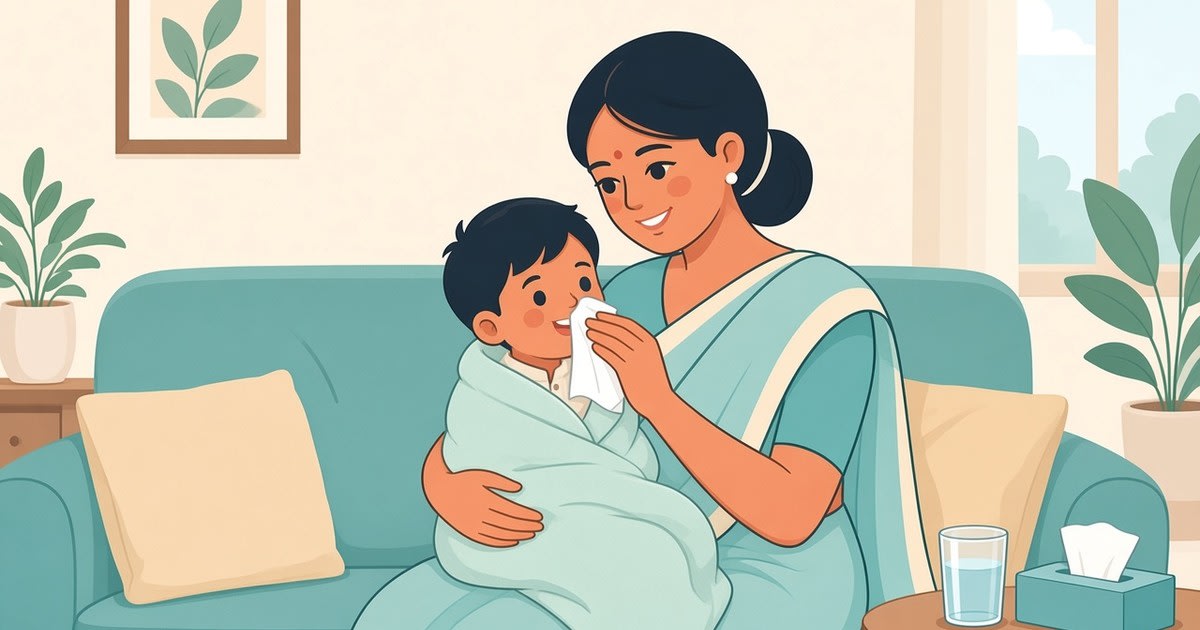
A child cold and cough usually clear on their own in about one to two weeks. Young children can get several colds a year, and most are caused by viruses, so antibiotics do not help. Your main job is to keep your child comfortable, drinking and watched for danger signs.
This guide explains symptoms, safe home care and when to see a doctor, including what to avoid.
What are the symptoms of a child's cold and cough?
According to the NHS:
- A runny or blocked nose and sneezing.
- A sore throat and cough.
- Mild fever.
- Tiredness, less interest in food, and sometimes a mild headache or earache.
See also cold versus flu.
What is safe home care for child cold and cough?
- Offer plenty of fluids; breastfed babies should breastfeed more often.
- Let your child rest, and keep the room comfortably warm but ventilated.
- Clear a blocked nose gently with saline drops or spray, as your doctor or pharmacist advises.
- Raise the head of the bed slightly for older children (not for babies under one, unless advised).
- Keep your child away from smoke, incense and dust.
- Wash hands often and teach covering the mouth when coughing.
- For fever or pain, follow your doctor's advice on medicine and dose for your child's age and weight.
Which home remedies or medicines should you avoid?
- Do not give cough and cold medicines to young children unless a doctor prescribes them.
- Do not give honey to babies under one year.
- Do not use antibiotics unless a doctor prescribes them.
- Avoid steam inhalation and hot water near children because of burn risk.
- Do not use mustard oil or other substances on the chest or nose of young babies.
- Do not give aspirin to children.
When should you see a doctor?
See a doctor if your child is under three months old with a fever, if symptoms last more than two weeks, if the fever lasts more than three days, if there is ear pain, a barking cough, wheezing or very poor drinking. See fever in children: when to worry.
Which signs need urgent help?
- Fast breathing, chest drawing in, grunting or noisy breathing.
- Blue lips or very pale skin.
- Not drinking, no urine for 8 hours, or hard to wake.
- A child under three months with any fever, or a seizure.
Seek emergency care immediately. For more on chest infections see pneumonia symptoms.
What should you tell the doctor?
How long the symptoms have lasted, temperature readings, how well your child drinks and feeds, breathing pattern, any medicines given, vaccination status and contact with sick people.
Common myths about colds in children
- "Cold weather causes colds." Viruses do; crowding and cold weather help them spread.
- "Antibiotics speed up recovery." They do not work on viruses.
- "Green mucus means an infection that needs antibiotics." Colour alone does not mean that.
What can parents watch for?
Check each day: Is your child drinking? Passing urine? Playing and responding? Breathing comfortably? Is the temperature settling? A short list like this helps you spot changes early. Keep notes of temperature and medicine times to share with the doctor.
What should you think about before sending your child to school or daycare?
Keep a child with a fever or severe tiredness at home. Once the fever has gone and the child is eating and playing, they can usually go back. Teach covering coughs, using tissues and washing hands. Tell teachers to call you if your child feels unwell or has trouble breathing.
Key points
- Most colds pass in one to two weeks with fluids and rest.
- Avoid cough medicines, antibiotics and risky home remedies.
- Fast or noisy breathing, poor drinking or drowsiness needs urgent care.
Frequently asked questions
How long does a child's cold last?
Usually about a week to ten days, though a cough can linger for two to three weeks.
Are saline nose drops safe for children?
Generally yes. Use them as the pack or your doctor advises, especially before feeds in babies.
Can I give cough syrup to my child?
Not to young children unless a doctor prescribes it. Most cough syrups do not work better than fluids and rest.
Which doctor should I see?
A pediatrician.
Medical disclaimer
This article is for general educational information only. It is not a personal diagnosis, treatment plan or medication advice. Talk to a registered doctor before making decisions about your or your family's health. ShifaMate is not an emergency medical service. Medical review pending.
Online consultation on ShifaMate
If you have a non-urgent symptom or question, you can browse ShifaMate's doctor directory and choose a suitable doctor to request an online consultation. To book through the app, see the ShifaMate app on Google Play. Check the fee and schedule on the doctor's profile before you book. You can also view pediatricians. In an emergency, do not wait online: call 999 or go to the nearest hospital.
References
Sources
This article is general health information, not medical advice for any individual. For your own situation, consult a registered doctor. In an emergency, go to the nearest hospital without delay.