Diabetes Diet Chart: What to Eat, What to Limit and a Sample Day
A diabetes diet chart helps you balance carbohydrates, protein and vegetables. Learn the key principles, fruit choices, a sample day and what to do for low sugar.
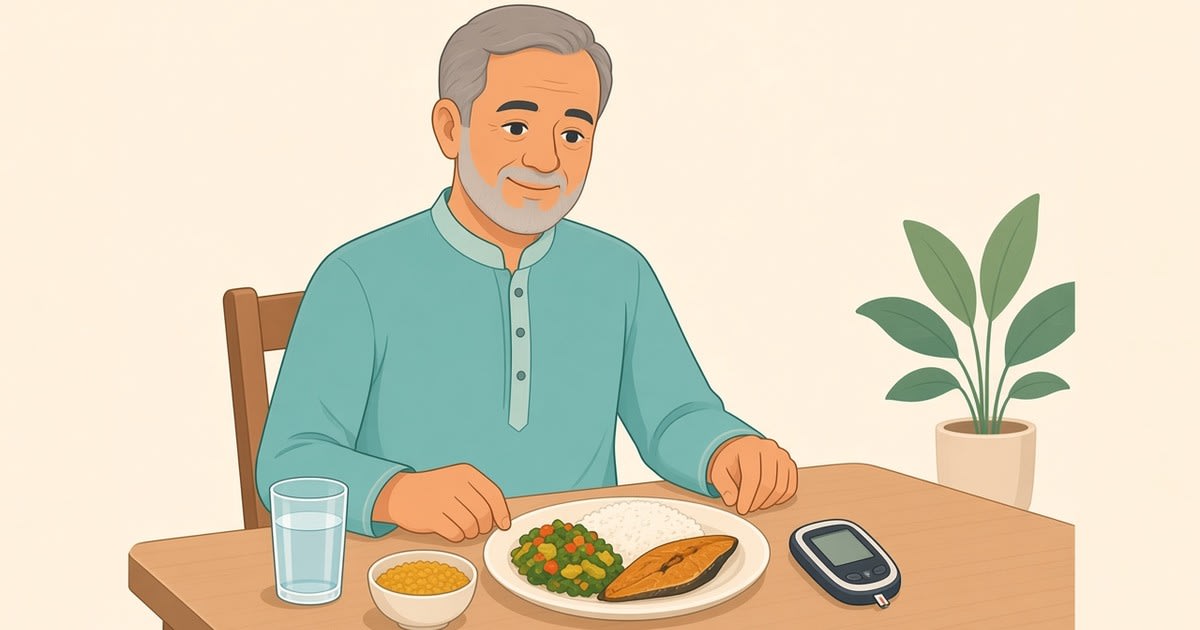
A diabetes diet chart is a simple plan for what, when and how much to eat so that blood sugar stays steady. The aim is not to stop eating rice or fruit entirely but to balance portions, add plenty of vegetables and protein, and eat at regular times.
The right plan depends on your medicines, weight and blood sugar, so use this as general education and ask your doctor or dietitian for a personal plan. See also early signs of diabetes.
What principles matter in a diabetes diet chart?
According to the NHS, MedlinePlus and WHO:
- Eat regular meals; do not skip meals, especially if you take insulin or certain tablets.
- Make half your plate vegetables, a quarter protein (fish, egg, pulses, chicken) and a quarter carbohydrate such as rice or roti.
- Choose whole grains (red flour roti, brown rice) over refined ones, and watch rice portions.
- Cut down on sugary drinks, sweets, sweetened tea and fried food.
- Choose healthy fats in small amounts and limit trans fats and ghee.
- Drink water; limit salt.
- Be physically active as advised.
How should you eat fruit and vegetables?
Fruit is healthy, but the sugar content varies. Guava, apple, grapefruit, papaya or a medium orange can usually be eaten in moderate amounts. Mango, jackfruit, lychee, banana and dates are high in sugar, so keep portions small and discuss them with your doctor. Whole fruit is better than juice because it contains fibre. Eat plenty of non-starchy vegetables and leafy greens.
What does a sample one-day menu look like? (Example only)
This is an educational example, not a personal diet plan. Your doctor or dietitian will adjust it based on your medicines, weight and blood sugar.
- Breakfast: Red flour roti with vegetables, plus an egg or dal.
- Mid-morning: One small fruit (such as guava) or a few nuts.
- Lunch: A moderate portion of rice, lots of vegetables or leafy greens, dal and fish or chicken.
- Afternoon: Tea without sugar and a small portion of puffed rice, chickpeas or a boiled egg.
- Dinner: Roti or a small portion of rice, vegetables, dal or fish. Do not eat very late or too much before bed.
What should you do when blood sugar is low?
If you use insulin or certain tablets, skipping meals or extra exercise can cause low sugar. Symptoms include sweating, shaking, dizziness, hunger and confusion. According to usual guidance, take fast-acting sugar such as glucose or a little sugar in water, then recheck and eat a proper meal when you can. If a person is unconscious or cannot swallow, do not give food or drink by mouth and call emergency services.
When should you see a doctor?
See a doctor when diabetes is first diagnosed, when your medicines change, if sugar stays high or swings often, or if you want a personalised plan. Regular checks of HbA1c, blood pressure and cholesterol are also important.
Which situations need urgent help?
- Confusion, fainting or seizures from low sugar.
- Very high sugar with vomiting, abdominal pain, fast breathing or extreme thirst and drowsiness.
- Chest pain or severe breathlessness.
What should you tell your doctor or dietitian?
Your medicines (including insulin), usual meal times and foods, weight, physical activity, previous sugar readings and HbA1c, other conditions, and food preferences and fasting habits.
Common myths about diabetes and food
- "You must give up rice completely." Portion and balance matter more.
- "Diabetic-labelled sweets are safe." They can still raise sugar and calories.
- "Fruit is forbidden." Whole fruit in portion is fine for most.
- "Herbal remedies replace medicine." They do not, and some interact with medicines.
What should you remember when eating out or at festivals?
Plan ahead: eat a small healthy snack before a feast, fill your plate with vegetables and protein first, and take small portions of rice, biryani and sweets. Drink water instead of sugary drinks, and keep your medicines on schedule. If you fast, see fasting with diabetes in Ramadan.
Key points
- Balanced plate, regular meals and smaller carbohydrate portions.
- Choose whole grains and whole fruit; limit sweets and sugary drinks.
- Learn the signs of low sugar and keep fast-acting sugar handy.
Frequently asked questions
Do people with diabetes have to stop eating rice completely?
No. Reduce the portion, balance with vegetables and protein, and discuss it with your dietitian.
Can people with diabetes eat eggs and fish?
Generally yes, in sensible amounts, cooked with little oil.
When should I eat dinner?
Try to eat at least two to three hours before bed and avoid heavy late-night meals.
Which doctor should I see?
A medicine specialist or an endocrinologist; a dietitian can help with meal plans.
Medical disclaimer
This article is for general educational information only. It is not a personal diagnosis, treatment plan or medication advice. Talk to a registered doctor before making decisions about your or your family's health. ShifaMate is not an emergency medical service. Medical review pending.
Online consultation on ShifaMate
If you have a non-urgent symptom or question, you can browse ShifaMate's doctor directory and choose a suitable doctor to request an online consultation. To book through the app, see the ShifaMate app on Google Play. Check the fee and schedule on the doctor's profile before you book. You can also view internal medicine specialists. In an emergency, do not wait online: call 999 or go to the nearest hospital.
References
Sources
This article is general health information, not medical advice for any individual. For your own situation, consult a registered doctor. In an emergency, go to the nearest hospital without delay.