Hepatitis B Symptoms, Testing and Prevention: A Guide for Bangladesh
Most people with hepatitis B have no symptoms. Learn the signs, how it spreads, testing, treatment for chronic infection, and how vaccines protect.
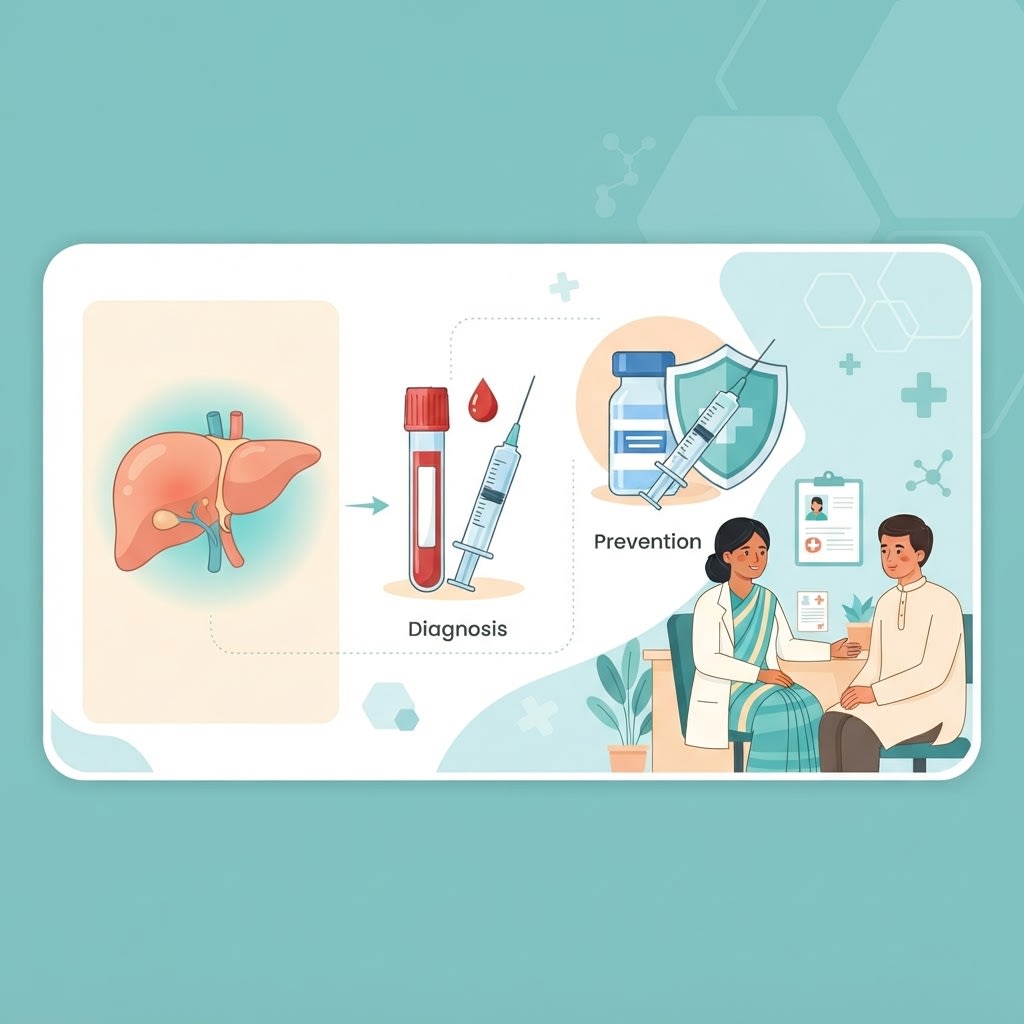
Status: Pending Qualified Medical Review. This article has not yet been reviewed by a qualified medical professional.
Many people in Bangladesh first learn they have hepatitis B by accident — during a pre-job medical, a check-up before going abroad, blood donation, or a pregnancy test. They feel completely well. That's exactly what makes hepatitis B dangerous: it can silently damage the liver for years.
The WHO estimates 240 million people were living with chronic hepatitis B in 2024, and it caused about 1.1 million deaths, mostly from cirrhosis and liver cancer. In the WHO South-East Asia Region, which includes Bangladesh, the WHO estimates 43 million people are chronically infected.
The good news: hepatitis B is preventable with a safe, effective vaccine, and chronic infection can be treated. This guide explains the symptoms, how it spreads, testing and what to do next.
What Is Hepatitis B?
The WHO describes hepatitis B as a viral infection that attacks the liver and can cause both:
- Acute (short-term) illness
- Chronic (long-term) infection
The NHS says the infection usually lasts 1 to 3 months. If it lasts longer than 6 months, it is called chronic hepatitis B.
The NHS notes that babies, children and people with a weakened immune system are more likely to develop chronic hepatitis B.
Hepatitis B Symptoms
Many people have no symptoms
The WHO says most people don't experience any symptoms when newly infected. The NHS says most people have no symptoms or mild symptoms.
When symptoms happen (NHS and WHO)
- High temperature
- Tiredness — feeling very tired
- Pain in the upper tummy
- Feeling sick or being sick
- A raised, itchy rash (hives)
- Yellowing of the skin and whites of the eyes (jaundice) — may be less noticeable on brown skin; check the eyes
- Dark urine
- Pale stools
Example
Sohel, 26, applies for a job overseas. His medical test shows he's positive for hepatitis B surface antigen (HBsAg). He has never felt ill. A doctor explains that he needs more tests to check whether the infection is chronic and how his liver is doing, and that his family should be tested and vaccinated if needed.
Serious warning signs — go to hospital
When severe, acute hepatitis can lead to liver failure (WHO). Get emergency care for:
- Confusion, extreme drowsiness
- Vomiting blood or black stools
- Swollen belly
- Worsening jaundice with severe weakness
- Bleeding or easy bruising
How Hepatitis B Spreads
The WHO says hepatitis B is most commonly spread:
- From mother to child during birth and delivery
- In early childhood
- Through blood or body fluids — including sex with an infected partner, unsafe injections, and exposure to sharp instruments
The NHS also lists:
- Sharing needles
- Injury from a used needle
- Tattoos, piercing, or medical or dental procedures with unsterilised equipment
- Blood transfusions where blood isn't screened
Everyday risks to think about in Bangladesh
- Shared razors at barber shops — ask for a new blade
- Unsterilised equipment at unlicensed clinics, ear-piercing or tattoo stalls
- Reused needles or injections given outside proper health facilities
- Sharing toothbrushes or razors at home
How hepatitis B does NOT spread
It isn't spread by normal social contact such as hugging, sharing food or shaking hands. People with hepatitis B can work, study and live normally — they shouldn't face discrimination.
Testing for Hepatitis B
The WHO says you can't tell hepatitis B apart from other hepatitis viruses by symptoms alone — laboratory tests are essential. Several blood tests help diagnose and monitor it, including tests that show whether the infection is acute or chronic and how much the liver is affected. Doctors may also use ultrasound or elastography (a liver stiffness scan).
A common first test is HBsAg (hepatitis B surface antigen). A positive result means the virus is present; your doctor will arrange further tests.
Who should consider testing?
- Pregnant women — to protect the baby
- Family members and sexual partners of someone with hepatitis B
- People who've had unsafe injections, transfusions or procedures
- People with unexplained raised liver tests or jaundice
- Anyone worried they've been exposed
Treatment
Acute hepatitis B
The NHS says it usually clears up on its own. The WHO says there's no specific treatment for acute hepatitis B — care focuses on managing symptoms, a healthy diet and plenty of fluids to prevent dehydration. Your doctor may arrange liver specialist follow-up.
Chronic hepatitis B
The WHO says chronic infection can be treated with oral antiviral medicines, including tenofovir or entecavir. Treatment can:
- Slow cirrhosis
- Reduce liver cancer
- Improve long-term survival
The WHO notes most people who start treatment must continue it for life. The NHS says there's no known cure for chronic hepatitis B, and you'll need regular check-ups with a liver specialist.
Not everyone with chronic hepatitis B needs medicine straight away — a specialist decides based on tests. Never stop antiviral medicine without advice.
Living With Hepatitis B
The NHS advises:
Do
- Rest and stay hydrated
- Ask your doctor about painkillers, including how much is safe
- If itchy, keep your room well ventilated, wear loose clothing, and avoid hot showers
Don't
- Don't drink alcohol
- Don't have sex without a condom
- Don't share razors, toothbrushes or needles
Also
- Avoid unprescribed herbal or "liver tonic" products without asking your doctor — some can harm the liver
- Get family members tested and vaccinated
- Keep all follow-up appointments
Hepatitis B in Pregnancy
The WHO says hepatitis B can pass from mother to child, and this can be prevented with antiviral medicines in pregnancy (when needed) plus vaccinating the baby soon after birth. If you're pregnant, ask for a hepatitis B test and tell your doctor if you're positive.
Prevention: The Hepatitis B Vaccine
The WHO says:
- The vaccine is safe, available and effective, and offers nearly 100% protection
- All babies should get the hepatitis B vaccine as soon as possible after birth — within 24 hours — followed by two or three more doses at least four weeks apart
- Boosters are not usually needed after the full series
- Protection lasts at least 20 years, probably for life
Make sure your children complete their routine childhood vaccines through the national EPI programme, and ask your doctor about vaccination for adults at risk, such as family members of someone with hepatitis B and health workers.
Related reading: Yellow eyes or skin? See jaundice causes in adults. Pregnant women should also know the pregnancy danger signs, and your doctor may also order a CBC report.
Frequently Asked Questions
What are the first symptoms of hepatitis B?
Often none. When present: tiredness, fever, nausea, upper tummy pain, dark urine, pale stools and yellow eyes or skin.
Can hepatitis B be cured?
Acute hepatitis B usually clears on its own. Chronic hepatitis B has no known cure but can be controlled with antiviral medicine.
Is hepatitis B contagious through food?
No. It spreads through blood and body fluids, and from mother to baby — not through sharing food.
What does a positive HBsAg test mean?
It means hepatitis B virus is present. You need more tests to know if it's acute or chronic and how your liver is.
Can a woman with hepatitis B have a healthy baby?
Yes. With antiviral treatment when needed and vaccination of the baby soon after birth, mother-to-child transmission can be prevented (WHO).
Should my family get tested?
Yes. Family members and sexual partners should be tested and vaccinated if not protected.
Talk to a Doctor About Hepatitis B on ShifaMate
If you've tested positive for HBsAg or have questions about hepatitis B, you can consult a verified doctor through ShifaMate. Share your reports (HBsAg, liver function tests, ultrasound) as photos. The doctor can explain your results, advise on further tests and specialist referral, and guide your family on testing and vaccination. You can also browse ShifaMate doctors.
Confusion, vomiting blood or a swollen belly need emergency care — call 999.
References
This article is for general information and does not replace advice from a qualified doctor.
Sources
This article is general health information, not medical advice for any individual. For your own situation, consult a registered doctor. In an emergency, go to the nearest hospital without delay.


