Antibiotic Resistance in Bangladesh: Why Misuse Is Dangerous and How to Use Antibiotics Safely
Antibiotic resistance makes infections harder to treat. Learn why misuse is risky, when antibiotics are really needed, and how to take them safely.
Status: Pending Qualified Medical Review. This article has not yet been reviewed by a qualified medical professional.
In many neighbourhoods in Bangladesh, you can walk into a pharmacy with a cough or loose motions and walk out with antibiotics — no prescription, no test, just "a strong medicine for 3 days". Leftover strips get shared with family members. A course is stopped as soon as the fever goes.
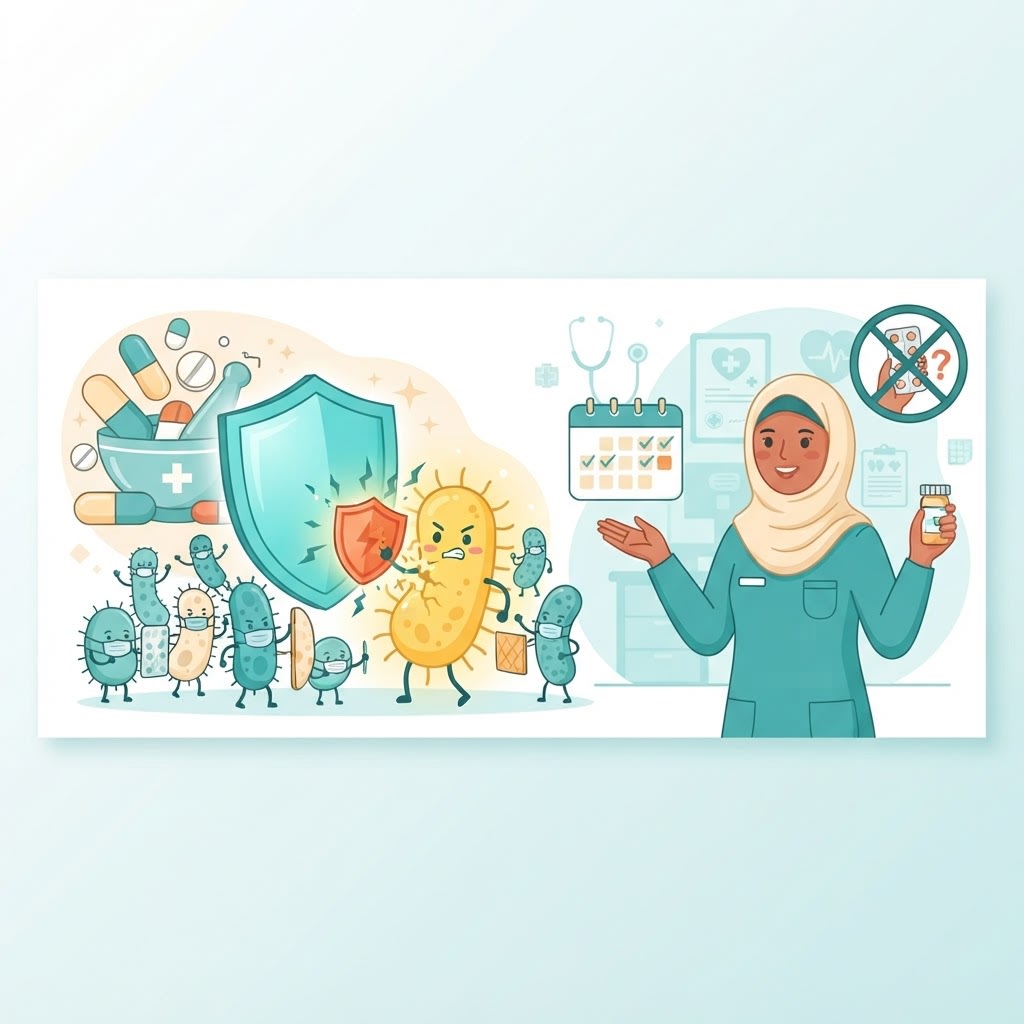
It feels practical. But this habit is helping to create antibiotic resistance — infections that no longer respond to medicines. The WHO calls antimicrobial resistance a major global health threat. This guide explains what resistance is, why misuse matters, and how to use antibiotics safely.
What Is Antibiotic Resistance?
The WHO explains that antimicrobial resistance (AMR) happens when bacteria, viruses, fungi and parasites stop responding to medicines meant to kill them. As a result, infections become difficult or impossible to treat, increasing the risk of spread, severe illness, disability and death.
Antibiotics are one type of antimicrobial — they work against bacteria.
How big is the problem?
According to the WHO:
- Bacterial AMR was associated with more than 4.7 million deaths worldwide in 2021.
- About 1 in 6 laboratory-confirmed bacterial infections worldwide were resistant to antibiotics in 2023.
- Misuse and overuse of antimicrobials are driving the development and spread of drug-resistant germs.
- There are few new medicines in the pipeline.
The NHS warns that overuse has led to the emergence of "superbugs" — strains of bacteria resistant to many antibiotics.
Why Misuse Matters for You
The WHO says AMR:
- Is linked with more illness and death, and fewer treatment options
- Raises the risk of complications in surgery and other procedures
- Drives up costs — longer hospital stays, more intensive care, more expensive second-line antibiotics and more tests
In practice, this can mean a simple urinary infection, typhoid or pneumonia needing injections, hospital admission, or expensive medicines because common tablets no longer work.
Antibiotics Do Not Work for Everything
The NHS is clear:
- Antibiotics do not work for viral infections such as colds and flu, and most coughs
- Many mild bacterial infections get better on their own
- Antibiotics are no longer routinely used for chest infections, ear infections in children, and sore throats
- Take your doctor's advice on whether you need them
Common situations where antibiotics usually don't help
- Common cold, runny nose (see cold vs flu)
- Flu
- Most sore throats
- Most coughs
- Dengue — a virus; antibiotics do nothing
- Most cases of simple watery diarrhoea (ORS is the key treatment)
When antibiotics may be needed
The NHS says antibiotics may be used for bacterial infections that:
- Are unlikely to clear up without them
- Could take too long to clear
- Carry a risk of serious complications
- Could infect others
Examples a doctor may treat with antibiotics include confirmed or likely UTIs, typhoid, pneumonia, some skin infections, and dysentery — depending on assessment.
Common Antibiotic Mistakes in Bangladesh
- Buying antibiotics without a prescription
- Stopping early when you feel better
- Taking leftover antibiotics from a previous illness
- Sharing antibiotics with family or neighbours
- Taking the wrong dose, or skipping doses
- Asking the doctor for antibiotics "just in case"
- Using antibiotics for cold, flu or dengue
Example
Rina, 33, gets burning urine and buys a 3-day antibiotic from a local pharmacy. She feels better and stops after 2 days. A month later, the infection returns with fever and back pain. A urine culture shows the bacteria are now resistant to that antibiotic, and she needs a different, more expensive treatment. A doctor's assessment at the start could have chosen the right medicine and duration.
How to Use Antibiotics Safely
The NHS advises:
- Take antibiotics as directed on the packet or leaflet, or as instructed by your doctor or pharmacist
- Take all the medicine you are prescribed, even if you feel better (NHS UTI guidance)
Practical checklist
- ✅ Only take antibiotics prescribed for you, for this illness
- ✅ Take them at the right times and for the full duration your doctor says
- ✅ Ask whether to take them before or after food
- ✅ Tell your doctor about allergies, pregnancy, breastfeeding, and other medicines
- ❌ Don't save leftovers or share them
- ❌ Don't pressure your doctor for antibiotics if they say you don't need them
- ❌ Don't buy antibiotics without a prescription
Side effects
The NHS says antibiotics can cause diarrhoea and feeling sick, usually mild. Rarely, people have allergic reactions. Seek emergency help (call 999) for swelling of the face or throat, difficulty breathing, or a severe rash after taking an antibiotic.
Still infectious?
The NHS notes you may still be infectious after starting antibiotics — it can take 48 hours to 14 days depending on the infection.
Preventing Infections Reduces Antibiotic Use
The WHO lists key drivers of AMR including inappropriate antibiotic use, poor access to clean water, sanitation and hygiene (WASH), and weak infection prevention. Everyday prevention helps:
- Wash hands with soap
- Drink safe water
- Eat properly cooked food
- Keep vaccinations up to date
- Practise safe food handling at home
Questions to Ask Your Doctor
- "Is this infection bacterial or viral?"
- "Do I really need an antibiotic?"
- "How long should I take it, and what if I miss a dose?"
- "What side effects should I watch for?"
- "When should I come back if I'm not better?"
Frequently Asked Questions
What is antibiotic resistance in simple words?
It's when bacteria change so that antibiotics no longer kill them, making infections harder to treat.
Do antibiotics work for cold and flu?
No. The NHS says antibiotics don't work for viral infections like colds and flu.
Is it OK to stop antibiotics when I feel better?
Take antibiotics exactly as your doctor prescribes. NHS guidance advises taking all the medicine prescribed even if you feel better.
Can I use leftover antibiotics?
No. They may be the wrong medicine or dose, and misuse adds to resistance.
Why won't my doctor give me antibiotics?
Your doctor may judge the infection is viral or will clear on its own. Unnecessary antibiotics cause side effects and resistance.
Can resistance affect me personally?
Yes. The NHS warns taking antibiotics when you don't need them can mean they won't work for you in the future.
Get the Right Advice Before Taking Antibiotics
If you're unsure whether you need an antibiotic, you can consult a verified doctor through ShifaMate. Describe your symptoms, how long you've been ill, and share any test reports. The doctor will decide whether an antibiotic is appropriate and may issue a digital prescription when clinically appropriate. You can also browse ShifaMate doctors.
Severe allergic reaction or difficulty breathing? Call 999.
References
- World Health Organization. Antimicrobial resistance (fact sheet)
- NHS. Antibiotics
- NHS. Antibiotic resistance
- NHS. Antibiotics — side effects
This article is for general information and does not replace advice from a qualified doctor.
Sources
This article is general health information, not medical advice for any individual. For your own situation, consult a registered doctor. In an emergency, go to the nearest hospital without delay.


