Kidney Stone Symptoms: Pain, Causes, Treatment and How to Prevent Them
Kidney stone pain can be severe. Learn kidney stone symptoms, when to get urgent help, how stones are treated, and prevention tips for hot weather.
Medically reviewed by Dr. Atiqur Rahman Shuva, MBBS · Reviewed on 30 October 2026
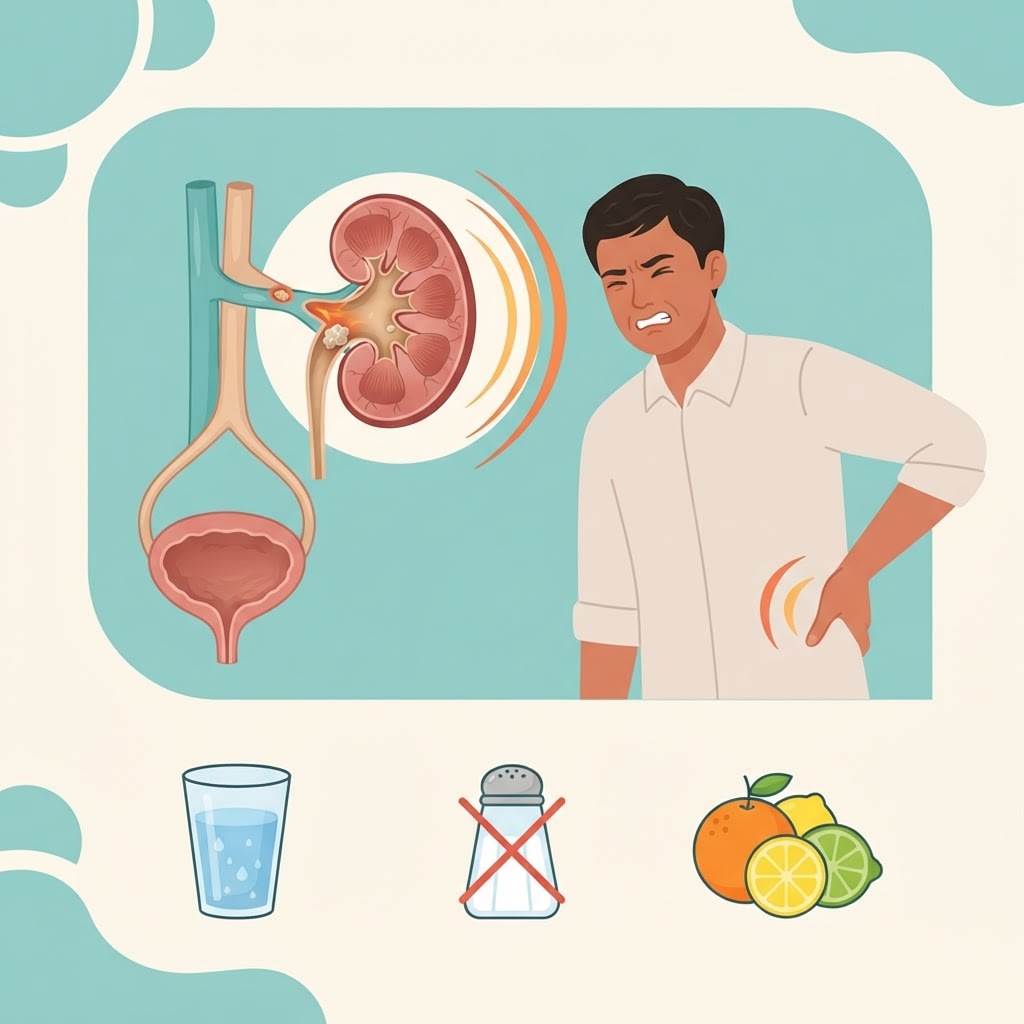
People who have had a kidney stone often say it's the worst pain they've ever felt — a sharp, gripping pain in the side or back that comes in waves, sometimes making them sweat or vomit. In a hot country like Bangladesh, where many people don't drink enough water, kidney stones are a familiar problem.
The good news, according to the NHS, is that most kidney stones can be treated at home with medicine, and there are clear ways to lower the chance of them coming back. This guide explains the symptoms, when to get urgent help, and how to prevent stones.
What Are Kidney Stones?
The NHS explains that kidney stones are usually caused by a build-up of chemicals found in urine, which form hard lumps in the kidneys.
Small stones are common and may cause no symptoms — you might pass them in your urine without noticing. Larger stones can cause severe pain.
Kidney Stone Symptoms
The pain (NHS)
- Usually starts in the side of your tummy or lower back
- May spread to the groin (top of the inner thigh), the testicles, or the area around the vaginal opening
- Comes and goes — periods of very severe pain, then easing or stopping
Other symptoms (NHS)
- High temperature, or feeling hot, cold or shivery
- Feeling sick or vomiting
- Needing to pee often
- Cloudy urine
Some people also notice blood in their urine (pink, red or brown) — this should always be checked by a doctor.
Example
Hasan, 42, works as a security guard in Dhaka and spends long hours standing outside in the heat. He drinks little water because there's no toilet nearby. One night he wakes with stabbing pain in his right side that spreads to his groin. He can't sit still, vomits twice, and his urine looks pinkish. His family takes him to a hospital emergency department, where tests confirm a kidney stone.
When to Get Urgent Help
The NHS says get urgent medical help if you have kidney stones that are causing symptoms, especially if:
- You're in severe pain
- You have a high temperature, or feel hot, cold or shivery
Go to hospital immediately if you have:
- Severe pain that painkillers don't control
- Fever or shivering with side or back pain — this can mean an infected, blocked kidney, which is an emergency
- Vomiting and unable to keep fluids down
- Passing very little or no urine
- Only one working kidney and new pain
How Are Kidney Stones Diagnosed?
The NHS says a doctor can usually diagnose kidney stones based on symptoms. They'll ask about your conditions, medicines, diet and family history. You may need:
- Urine tests and blood tests
- A CT scan (adults) if pain is severe
- An ultrasound scan if you're pregnant or for children under 16
Kidney Stone Treatment
At home, with medicine
The NHS says most stones can be treated at home with medicine. They can still be painful and may take a few weeks to pass. You'll usually be advised to:
- Drink lots of water
- Take painkillers
- Take anti-sickness medicine if needed
- Take medicines to help the stone pass
You may be asked to collect the stone when you pass it (for example, by peeing through a strainer) so it can be tested.
Hospital procedures for larger stones (NHS)
- Shock wave treatment from outside the body to break up the stone — no anaesthetic needed
- Passing a thin tube up the urethra or through a small cut in the back — done under general anaesthetic
Your doctor or urologist will advise which is right.
Don't self-treat with unproven remedies
Many herbal and "stone-dissolving" products are sold in Bangladesh. Don't rely on these instead of medical assessment, especially if you have fever or severe pain.
What Increases the Risk?
The NHS says you're more likely to get kidney stones if you:
- Don't drink enough water to stay hydrated
- Have a condition that increases certain chemicals in the body, such as metabolic syndrome
- Take certain medicines, including aspirin, antacids, diuretics and antibiotics
Stones are more likely to come back if you (NHS):
- Eat a high-protein, low-fibre diet
- Are inactive or bed-bound
- Often have kidney or urine infections
- Have a close family member with kidney stones
- Have had stones before
Heat and heavy sweating — common in Bangladesh, especially for outdoor workers — add to dehydration.
How to Prevent Kidney Stones
The NHS recommends:
Do
- Drink 2.5 to 3 litres of water a day if you're an adult — children 1 to 2 litres
- Add fresh lemon juice to water
- Avoid lots of fizzy, caffeinated or alcoholic drinks
- Make sure you get enough calcium in your diet
- Check your urine colour — dark urine means you need to drink more
Don't
- Don't have too much salt — adults less than 6 g a day
- Don't make big diet changes without talking to your doctor
Practical tips for Bangladesh
- Carry a water bottle to work, school and on journeys
- Drink more on hot days and if you sweat a lot
- Cut down on raw salt, chanachur, chips and pickles
- Don't hold urine for long periods
- If you're fasting, drink plenty of water between iftar and sehri
- Your doctor may give diet advice based on your stone type
Related reading: Burning urine with fever may be an infection — see UTI symptoms in women. Not sure if it's your back or kidney? Read lower back pain relief. Hydration matters in hot weather too: see heat stroke symptoms and first aid.
Frequently Asked Questions
What are the first signs of a kidney stone?
Pain in the side or lower back that comes and goes, sometimes spreading to the groin, often with nausea or needing to pee often.
How long does it take to pass a kidney stone?
The NHS says it may take a few weeks for a stone to pass in your urine.
How much water should I drink to prevent kidney stones?
The NHS advises adults to drink 2.5 to 3 litres a day.
Does lemon water help kidney stones?
The NHS recommends adding fresh lemon juice to water as part of prevention.
Should I stop eating calcium if I have kidney stones?
No. The NHS advises getting enough calcium in your diet. Don't cut it out without medical advice.
Is kidney stone pain an emergency?
Severe pain, or pain with fever or shivering, needs urgent medical help.
Get Advice on Kidney Stones From a ShifaMate Doctor
If you've had kidney stones before, have mild symptoms, or want to discuss an ultrasound or urine report, you can consult a verified doctor through ShifaMate. Share your symptoms and reports as photos. The doctor can advise on next steps and prevention, and issue a digital prescription when clinically appropriate. You can also browse ShifaMate doctors.
For severe pain, fever with side pain, or inability to pass urine, go to hospital immediately.
References
This article is for general information and does not replace advice from a qualified doctor.
Sources
Last updated: 31 October 2026
This article is general health information, not medical advice for any individual. For your own situation, consult a registered doctor. In an emergency, go to the nearest hospital without delay.


